
QR Wristband for Kids UK: A Dad's Plan for Days Out
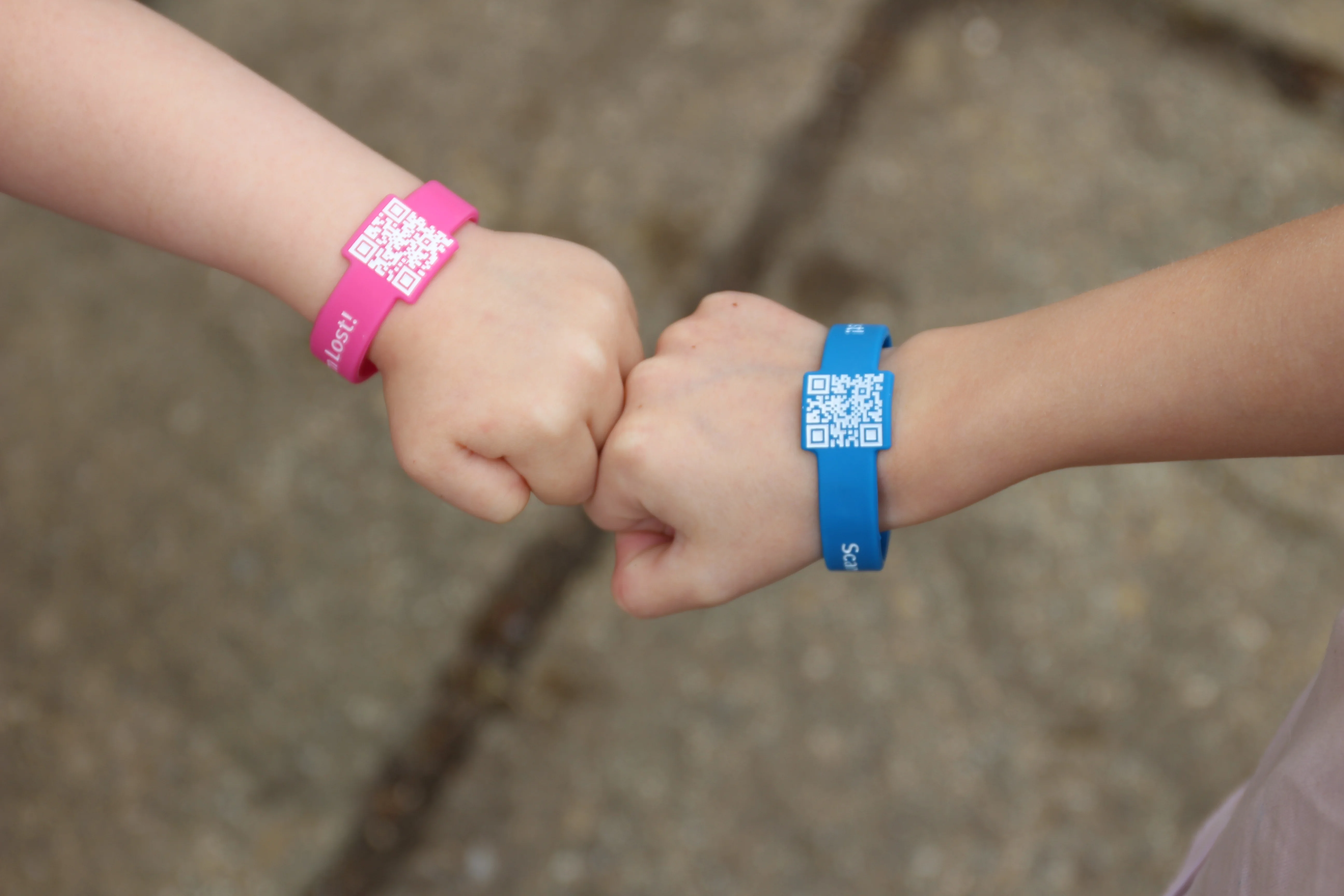
A QR wristband for kids is a plain strap with a small printed QR code on it. A finder uses any phone's camera, taps the link, and reaches you by SMS in seconds. No app for them to download, no subscription on your side. This post is about the QR wristband for kids UK families take to theme parks, festivals and busy markets, plus the tension I live with as a dad.
We live in a time where we want our children to go off and explore but we're also terrified of what could happen if we lose them. I do my best to allow them to have a little bit of distance but not too much where I start to panic. I'm definitely more anxious in a way most parents back in the day weren't. Here's a plan I run on days out, and the design choices I made for the kit I now build.
Key takeaways
- I'm a dad first and a founder second. The world is bigger than my anxiety, and I want my kids to roam. I also want a safety net I trust.
- Pick a single named meeting point per zone, take a morning photo, brief them on staff, and put a QR wristband on the wrist.
- A QR code does more than a written number on a strap. The band stays anonymous, you can route to more than one phone, update without rebuying, and a finder never gets your raw mobile.
- If a finder scans a Quick Return wristband, I get an SMS within seconds. No app on either side. No subscription.
Why I'm writing this (and why I built the kit)
I run Quick Return. We make QR-coded keyrings, stickers and the children's wristband I'll talk about most here. The reason I started the company is unflattering: I lose things… all the time, and I have kids who are already at the age where they want a bit of distance from me in a crowd. The two reasons sit in the same drawer in my head.
I think the world is bigger than my anxiety. I want my kids to walk to be able to feel like they're not stuck at my waist, get a bit lost in soft-play and find their own way back. That's how children learn anything. I'd be lying if I said I wasn't more nervous than parents a generation ago seemed to be about exactly the same things, in the same country, twenty-five years on. So this isn't a "control your kids" post. It's the plan I actually run on days out, and the bits of the wristband I sweated over because the alternatives weren't good enough for my own kids' wrists.
The "I've lost sight of them" moment
It should never feel normal that I can't see my girls. Most days out are uneventful and that's the point. The honest reason to plan anyway is that crowded venues compress your reaction time. A queue shifts at Chessington. A costumed character pulls three families forward at Legoland Windsor. A Christmas market crowd thickens for thirty seconds at exactly the wrong moment. My eldest is one row over from where I thought she was and the bottom drops out of my stomach.
I'm not going to scare anyone with statistics, partly because I know how it feels to read them with your own kids in the room. The NSPCC has good general guidance on safer days out. Missing People is the UK charity to know about if a separation ever escalates. I've saved both. The point of a parent's plan is not fear, it's having something to do in the first sixty seconds so I can stay calm.
Before we go: the 5-minute plan I run with my kids
I do this on the kitchen table the morning of any big day out. Five minutes, every time, even if they roll their eyes.
- One named meeting point per zone. Not "the entrance", which means three different things at Alton Towers. Pick a specific shop, sign or ride and tell your child what it's called and what it looks like. We use the closest food place because food is memorable.
- Morning "outfit of the day" photo. Family photo, an excuse to get an updated shot of everyone looking "happy". It also gives me something to show a staff member or another parent of exactly what they look like today.
- Brief them on who to go to. "If you can't see me, find either a lady with children or someone with a uniform, say you've lost your mum or dad, and ask them to scan your wristband." We practise it in the car on the way down.
- QR wristband on, not a name tag. The band does the same job a paper bracelet would, without printing my child's name where any stranger can read it. More on why this matters in a minute.
- The "if we're separated" rule. One simple instruction, repeated calmly: stop, stay where you are, find a mum or a member of staff. Not ten clauses. Children remember one rule, not five.

Why I chose a QR wristband over a written number
This is a personal call and parents land on different sides of it. Here's why I went the way I did.
What a QR code carries that a written number can't
A written phone number on a strap works, it's cheap, and it's a defensible choice. But the comparison isn't even. A QR code unlocks a few things a sharpie line can't:
- The strap stays anonymous. Anything printed on a visible band can be read by anyone in earshot. A stranger reading a child's first name and saying it out loud sounds familiar in a way I'd rather not introduce. The QR code carries the contact details privately; the band itself shows nothing.
- You can route to more than one phone. If I'm not reachable, a scan can land with my partner, my mum, or both at once. A single number on a strap is a single point of failure.
- You can update without rebuying. Move house, change number, swap who's on call this weekend, all in under a minute. A printed number is fixed for the life of the strap.
- The finder doesn't get your raw mobile. They land on a reunite page that lets them message you. You decide what to share back. With a written number, your direct line is on a stranger's phone forever.
- No reward to a stranger for finding a child. We deliberately don't allow rewards to be set on a child's wristband. A cash incentive on a stranger's phone for finding a child is a safeguarding risk we won't ship.
The stranger-name risk sits low for most families and they're not wrong to weigh it that way. For my own kids, the combination of an anonymous strap, multiple contacts, and a controlled reunite page is what made me go with a QR over a sharpie line.
How a Quick Return wristband actually works
The band has a small printed QR code. A finder uses the standard camera app on their phone, taps the link that comes up, and lands on a clean reunite page. They tap to message or call. I get an SMS within seconds. No app to install, no account for them to set up, no friction. We cover the scanning side in more detail in how scanning works. If you're weighing this against a Bluetooth tracker, I wrote a longer comparison in AirTag and Tile alternatives UK.
During the day: the proximity habits I rely on
Most separations I've heard about happen in the same three places: queue switches, attraction exits where the crowd fans out, and food zones where adults take their eyes off children for ten seconds. The fixes are simple and I run them on autopilot now.
- Hand on shoulder in queues. Queues compress and reform constantly. A hand stays attached even when the queue shuffles sideways.
- Headcount at every gate change. Walking from queue to ride exit, into the next zone, into the toilets. I count out loud. My kids think it's annoying. Good.
- Wrist check at busy zones. Glance at the band once an hour.
- Plan the food stop. Decide who is paying and who is watching the kids before you join the queue, not after. Easy to miss when you're hungry.
If they're already out of sight: my first 10 minutes
I've thought about this a lot, because I know my brain stops working properly when I'm panicked. So I keep the list short.
- Stop. Don't sprint. Running makes it harder to see, harder to think, and harder for my child to spot me. Stay where they last saw me for thirty seconds in case they double back.
- Tell the nearest staff member. Theme parks, festivals and supermarkets run fast internal radio alerts. The earlier the alert goes out, the smaller the search area gets.
- Show the morning photo. "Six-year-old, blue raincoat, brown hair, last seen near the carousel at 11.20." A current photo cuts the description down to a glance.
- Watch my phone. If a finder scans the wristband, the SMS lands within seconds. I reply with where I am, ask them to stay put with my child, or arrange a meeting point with the staff member who's helping.
- Find the lost-and-found or safeguarding office. Most large UK venues mark these on the park map. If I didn't pick it out on the way in, I ask the staff member to walk me to the nearest one.
Choosing a QR wristband for kids: what to actually look for
I wrote this list as a customer first, then realised it's the spec sheet I designed Quick Return's wristband against. Use it when you're comparing options:
- No app required from the finder. Most strangers won't download an app to help. Anything that needs one is broken at the worst possible moment.
- No forced subscription. A safety device shouldn't have a renewal date. You shouldn't find out yours expired the day you needed it. If you cancel a Premium subscription on a Quick Return band, the band still works, you just lose the extra features like SMS scan alerts.
- Waterproof and light. A long queue at Alton Towers is sun cream, water bottles, ice-lolly drips and a sleeve pulled over a wrist. The band has to survive that.
- Easy to update. If your number changes, you should be able to update it in under a minute. Don't buy a band tied to a single registration that can't be edited.
After the day: the 30-second debrief
On the drive home, I ask one question: "if we got separated today, where would you have gone?" Their answer tells me whether the morning's brief stuck. If it didn't, I run it again next time, ideally with the same meeting-point named on the way in. Repetition is the whole trick. Kids remember the rule because they hear it in the same words every trip.
Frequently asked questions
Is a QR wristband for kids actually safe?
Yes. The strap itself doesn't carry personal details; the QR code points to a private contact page only the parent has set up. Quick Return wristbands need no app on the finder's side and the band works without a subscription. SMS scan alerts on the parent's side are part of the optional Premium plan.
Do QR wristbands need an app or a subscription?
No app on either side, any smartphone camera reads the QR code. The wristband itself works without a subscription, the QR code points to a reunite page where a finder can message you. SMS scan alerts, phone masking and location are part of the optional Premium plan, £3.99/month.
What happens if a stranger scans my child's wristband?
They see a short page that lets them message you. You receive an SMS within seconds and can reply or call back. The page is intentionally plain, so you choose what details to share back when you reply.
Should I put my child's name on the wristband?
It's a personal call. Some parents do, and it works for them. I chose not to on my own kids' bands because anything printed on a visible strap can be read by anyone in earshot, and a stranger calling a child by name can sound familiar. The QR code does the contact job without putting the name on display.
Which QR wristband for kids UK suits a long theme-park day?
Look for a waterproof, light, adjustable band with a printed QR code that holds up to sun cream and ice-lolly drips. The Quick Return child wristband is built for that exact day. See the live options on the shop page and pick the colour that's easiest to spot in a crowd.
Set one up before the next day out.
It takes about two minutes to register a band to your phone. Then it just sits on the wrist, doing the quiet job it's there to do.
Shop QR wristbands for kids