
AirTag and Tile Alternatives UK: QR Code vs Bluetooth
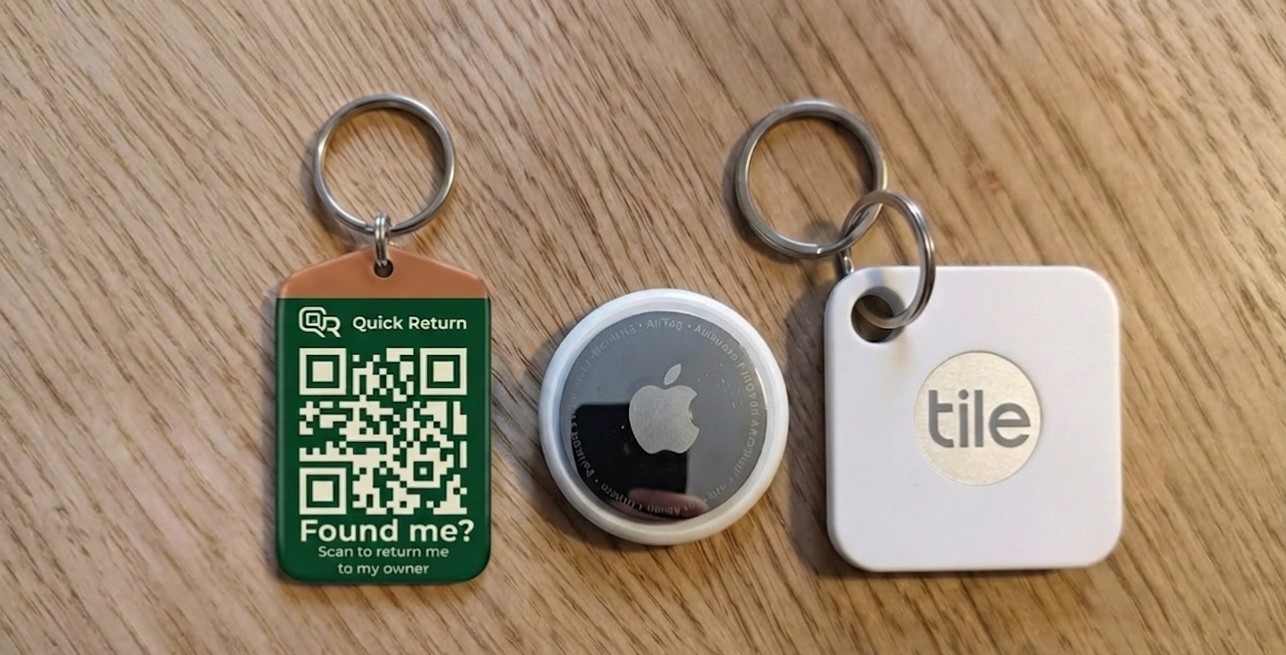
If you've searched for an AirTag or Tile alternative in the UK, you're already half-way to a better answer than either. Bluetooth trackers are good at one thing: telling you, roughly, where a thing is. They're not great at the other thing you might actually need: helping a stranger who finds your wallet on a bus get it back to you. That second job is what a QR code does cleanly, with no app, no battery, and no Apple ecosystem in the middle.
Key takeaways
- AirTag and Tile are good at passive location: the item pings nearby phones, you see it on a map.
- A QR code is good at active reunion: a human finds your thing, scans it with any camera, contacts you in seconds.
- Use a Bluetooth tracker for stuff that gets misplaced (keys at home, bag in an airport, bike theft). Use a QR code for stuff a stranger might pick up (kids' wristbands, pet collars, luggage, wallets).
- The two work well together. They cover different failure modes.
- Cost picture for a single item (UK RRP, May 2026): AirTag £29 + iPhone required, Tile £27.99 + app required, Quick Return QR tag from £4.99 + works with any phone's camera.
Up front: I run a QR code company
So I have an obvious bias. I'm not going to pretend AirTag and Tile are bad, because they're not. They do a specific job extremely well, and on some items they're the right call. What I want to do is help you pick the right tool for each item you actually own, instead of buying the same tracker for everything because it's the famous one. The honest answer for most households is "some of both."
What AirTag and Tile actually do
Both are Bluetooth trackers. Each tag is a small, battery-powered device that broadcasts an encrypted ID a few times a second. Other phones in the network notice the broadcast and quietly upload the location, so when you open the app you see roughly where your missing item was last seen.
The key word is network. AirTag uses Apple's Find My network, which is huge in a city centre because so many iPhones walk past every minute. Tile uses the Tile community network, which is smaller but works on Android too. The size of that network is what determines whether your missing thing shows up on a current map or a six-hour-old map.
That model is excellent for a specific shape of problem: I know where it roughly is and want to narrow it down. It is much weaker for the other shape: I have absolutely no idea where it is, and a kind stranger has just picked it up.
Where Bluetooth trackers fall short
Five things that bite people who bought a tracker for a job it isn't built for.
1. The finder needs your ecosystem
An AirTag is only as useful as the iPhones (or iPads) within Bluetooth range. A small village pub with no Apple devices in the room? Stale data. A petrol station forecourt at 3am? Stale data. Tile's network is broader on paper because it includes Android, but in practice it depends on Tile-app users specifically, and there aren't that many.
A QR code doesn't care which ecosystem the finder is on. They open their phone's camera, point it at the code, and they're on a contact page in two seconds. Works on a five-year-old budget Android the same as a brand-new iPhone.
2. The battery problem
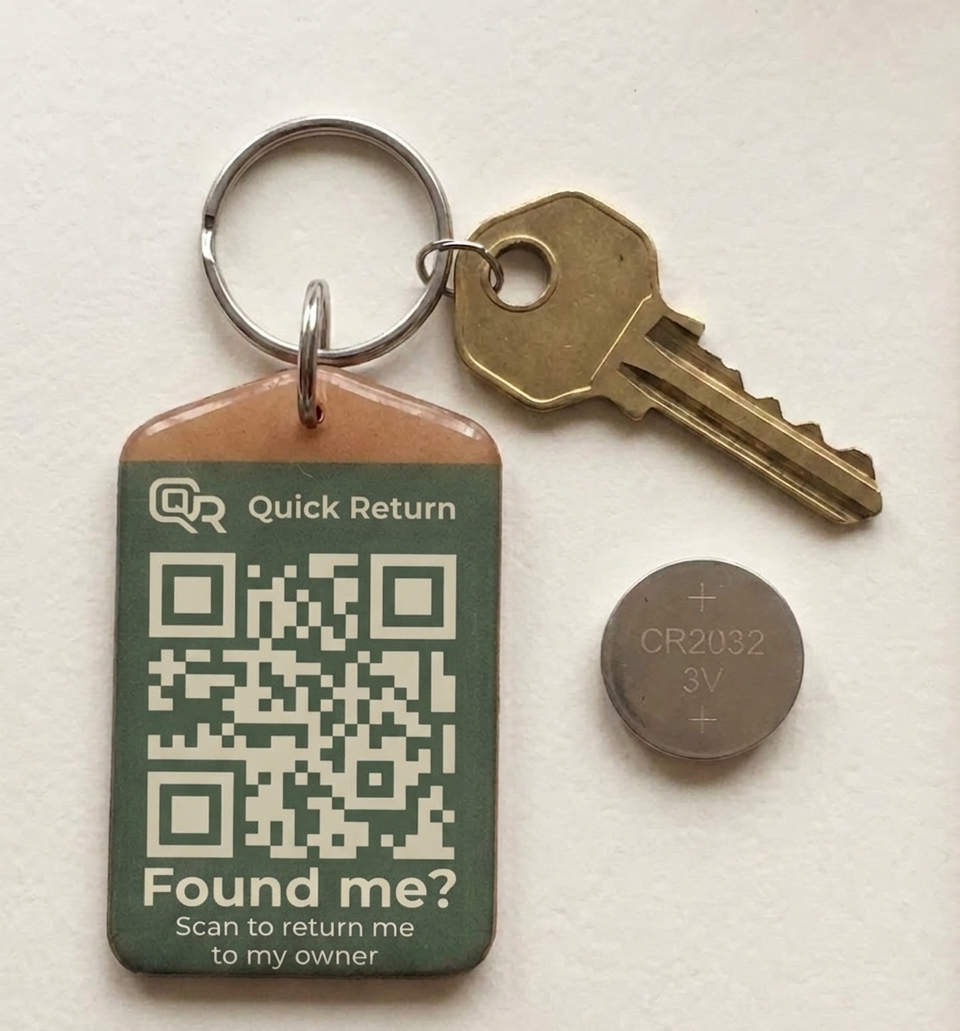
AirTag uses a CR2032 button cell, rated by Apple for about a year of battery life. Current Tile models claim up to three years on the same coin cell, which is much better, though "up to" is doing some work in that sentence. Older Tile models were sealed, which meant once the battery died you binned the tracker and bought a new one. Either way you have a maintenance task to remember, and the day you forget is the day you actually need it.
A QR code has no battery. Print it on the right material, treat the strap or sticker reasonably, and it will work in five years' time without you ever doing anything to it.
3. The cost stacks fast
At UK retail an AirTag is £29 single or £99 for a four-pack. A Tile is £27.99 single or £83.99 for a four-pack. So per tracker they land in the same neighbourhood, with Tile slightly cheaper if you buy in bulk. Tag five household items and you're well past £100 in either system before you start thinking about replacements. A Quick Return QR keyring is £4.99 as a one-off. The Premium subscription (£3.99/month, or £39.90/year) adds masked phone numbers and SMS scan alerts; you don't need it to use the tag.
4. The stalking question
AirTags have been misused to track people without consent. Apple has added unwanted-tracking alerts and Android has its own scanner, but the underlying capability remains: a small device can be hidden in a bag and broadcast its location. Met Police guidance on stalking now includes Bluetooth trackers as a recognised tool used by perpetrators.
A QR code can't do that. It's printed text on a strap or sticker. It transmits nothing on its own. It only does anything when a human picks it up and chooses to scan it.
5. Children, vulnerable adults, and "find vs reunite"
Putting an AirTag on a child to "track them" sounds reassuring until you think it through: the AirTag tells you where the device is, not where the child is. If the band falls off, the device's location is now meaningless. The thing you actually want, in any practical scenario where a child has wandered off, is a kind stranger who finds them being able to reach you in seconds. That's a contact problem, not a location problem. A QR code on the wristband is the right shape of tool for that. We covered the parent's-eye-view of this in our QR wristband for kids guide, including the safeguarding choice of keeping the child's name off the strap.
Where a Bluetooth tracker is still the right call
Don't pick a fight you can't win. There are real cases where AirTag or Tile beats a QR code clearly:
- Keys at home. You know they're somewhere in the house. You don't need a stranger to find them. You need a Bluetooth ping.
- Bag at an airport baggage carousel. Apple's network at major airports is dense. AirTag will tell you the bag was last pinged in Lisbon when you're standing in Manchester. That's specifically useful.
- Bike security. Hidden tracker, theft recovery use case. Different purpose entirely. A QR code on a stolen bike is mostly decorative.
- Pet that's run off into woods near home. Bluetooth + the family iPhone is genuinely the right tool here, especially for cats. Pair it with a collar QR code so a passer-by can also call you.
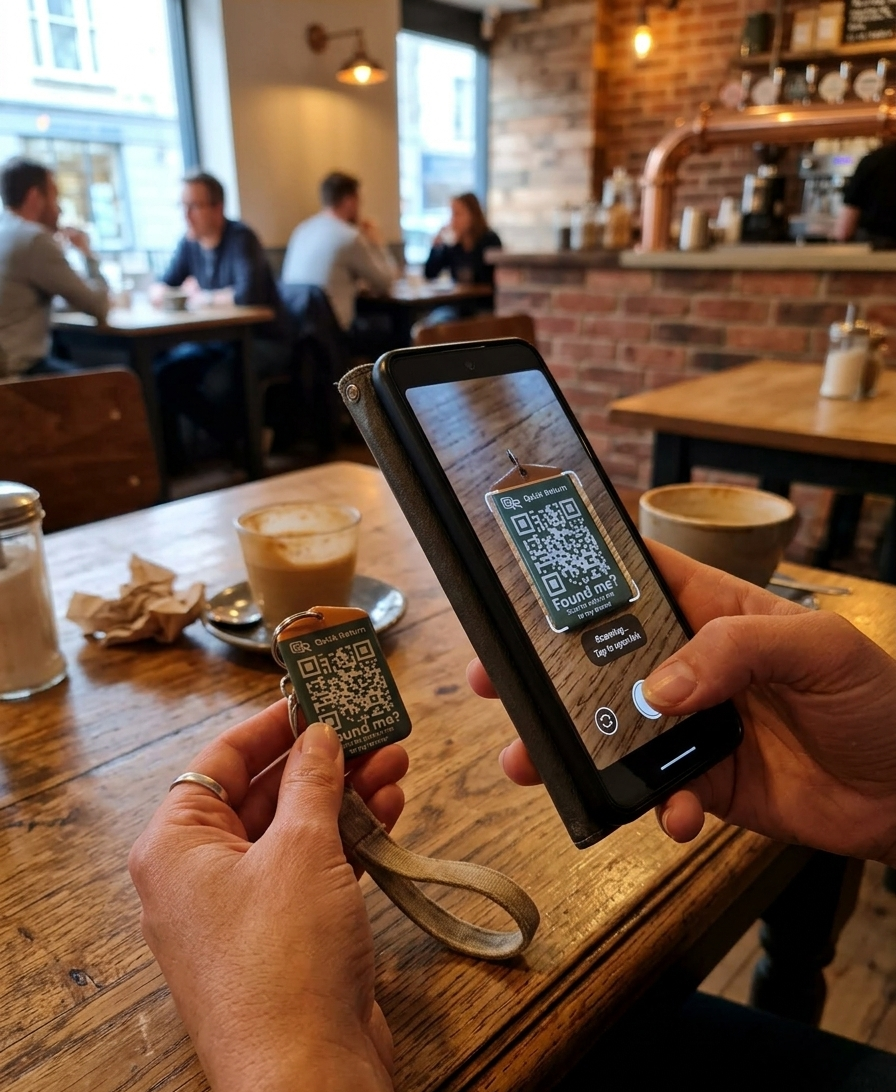
The use-case comparison: what to put on what
| Item | Best tool | Why |
|---|---|---|
| House keys | AirTag (or Tile) | Misplaced rather than lost. You want the ping. |
| Wallet | QR code | Lost = a stranger picked it up. They need a way to contact you, not a map. |
| Luggage | Both | AirTag for "where is my bag right now". QR for the airline staff who finds it three days later in Frankfurt. |
| Child's wristband | QR code | The job is contact, not location. AirTag tracks the device, not the child. |
| Vulnerable adult ID band | QR code | A discreet, non-stigmatising way for any passer-by to reach the carer. |
| Pet collar | Both | AirTag for the runaway, QR for the kind stranger who picks them up. |
| School bag | QR code | Cheap, no battery, survives PE drops. Teacher or admin can ping you in seconds. |
| Headphones / glasses case | QR sticker | Too small for an AirTag without a chunky case. A sticker fits and is unobtrusive. |
| Bike | AirTag (hidden) | Theft recovery scenario. Different problem class. |
Pretty clear which side you fall on for some of these? See the QR keyring, sticker pack and child wristband range while you're here.
Cost over five years
Prices below are apple.com/uk and tile.com/en-gb RRP as of May 2026, rounded. This is the back-of-an-envelope I ran for myself when I was setting up the family.
- Five AirTags: a four-pack (£99) plus one single (£29) is £128 up front. Annual battery is ~£10 a year for five trackers. Five-year cost roughly £170.
- Five Tiles: a four-pack (£83.99) plus one single (£27.99) is £112 up front. Tile claims up to three-year battery life, so call it one battery round across the five years, ~£10. Five-year cost roughly £120.
- Five Quick Return tags: £25 up front. Free plan keeps it at £25 across the five years. If you want Premium (masked numbers, SMS scan alerts), that's an extra £39.90/year on the annual plan, so the all-in is £25 + £200 = £225 over five years if you keep Premium the whole time.
Free-plan QR is the cheapest by a wide margin. Premium QR over five years lands above Tile but below the AirTag total, and you're paying for a different thing (masked phone numbers, scan alerts, anonymous chat) rather than battery-powered tracking. If your job is "ping me where the bag is right now," that's what AirTag is built for, and it's worth the money for that specific job. If your job is "make sure stuff comes back to us when someone finds it," the QR option is meaningfully cheaper and the finder doesn't need an app.
Privacy: the bit nobody likes to compare
Bluetooth trackers create a small, persistent signal that follows the item around. Apple and Tile have both put real engineering into anti-stalking protections, and both have improved year on year. They're not perfect. The signal exists, the privacy work is mitigation, not elimination.
A QR code is the opposite shape. It transmits nothing. The only data flow is when a human chooses to scan, and even then they see only what you've decided to put on your contact page. Quick Return Premium hides your real phone number behind a private number that forwards SMS and calls; the finder never sees your actual digits. If you cancel the band, the contact page is dead and that's it.
If you're tagging things for a vulnerable adult, a child, or anyone whose location you wouldn't want anyone else holding, the QR model is the safer architecture by default. There simply isn't a stalker workflow that uses it.
The honest verdict on AirTag and Tile alternatives
Buy an AirTag for things you misplace at home, want to track at airports, or want to recover from theft. Buy a Quick Return QR tag for things a stranger might find and want to return: kids' wristbands, pet collars, luggage, wallets, headphones, school bags, anything that ends up at a lost-property desk. Putting both on luggage is sensible. Putting an AirTag on a child is mostly theatre; put the QR code on the band and back it up with a meeting-point plan.
If you've read this far you can probably guess which one I run, and which list I think most households over-spend on. I'd rather you bought one of each and used them right than buy three AirTags for jobs they were never built for.
Frequently asked questions
Is a QR code a good AirTag alternative in the UK?
For lost-and-found scenarios where a kind stranger picks the item up, yes. A QR code reunites you when a human finds and scans your thing, with no app and no battery. AirTag is better when you want the item to be findable passively, like keys at home or a bag at an airport. Many people use both: a QR tag for the human side, an AirTag for the location side.
Why would I pick Quick Return over an AirTag?
No app for the finder, no battery to replace, no Apple ecosystem requirement, and lower per-item cost. A finder uses any phone's camera and can contact you in seconds. AirTag's network only works when an Apple device walks past it, which is excellent in a city and useless in many rural pubs and cafes.
Is Tile a better alternative than AirTag in the UK?
Tile works on Android too, which is its main pitch over AirTag. The trade-off is a smaller community network, so if no Tile user walks past your missing item, the location stays stale. For day-to-day key-finding it does the job. For a child's wristband or a pet collar, a QR code is more practical because the finder doesn't need any app at all.
Are AirTags safe? What about stalking concerns?
AirTags have legitimate uses but have been misused for stalking. Apple has added unwanted-tracking alerts that warn iPhone users when an unknown AirTag is moving with them. Modern Android now has the same alerts built in via a cross-platform standard Apple and Google ship together. A QR code can't be used the same way, because it doesn't transmit anything until a human finds the physical item and scans it.
Can I use an AirTag and a QR tag together?
Yes, and on important items it makes sense. The AirTag gives you a passive location signal, the QR tag gives a finder a one-tap way to contact you. The two cover different failure modes. Many of our customers do exactly this on luggage and pet collars.
Try a QR tag for the items most likely to be found by a stranger.
From £4.99. No app. No battery. Set up in two minutes.
Shop QR tags